Loading...
Buyer Guide
2026 Complete ComparisonBest Old Photo Enhancer
Compare old photo enhancer tools for vintage prints from early family portraits through 1990s color snapshots. Here is which workflow fits each project type — including the free options worth trying.
AH
ArtImageHub Editorial Team
Last updated: June 13, 2026
Quick Recommendation
Best Overall Value: ArtImageHub — $9.90 pay-first unlock, handles old prints with damage and fading
Best Free Option: GFP-GAN online demos — free Hugging Face demos with limits, decent face enhancement
Best Mobile App: Remini — $9.99/month, polished iOS/Android workflow, strong on faces
Best for Pro Workflows: VanceAI Photo Enhancer — $19.90/month with batch processing and API access
ArtImageHub is the best app to restore old photos in 2026 for one-time family restoration projects: old albums, inherited prints, genealogy scans, and damaged portraits that need a finished file rather than a recurring app subscription. It is not the only useful tool. Remini is strongest when the job is mobile face enhancement, MyHeritage fits users already paying for genealogy, VanceAI fits higher-volume editing teams, and LetsEnhance is closer to a modern-photo upscaler. The wider source pool also includes YouCam, Media.io, CapCut, PicWish, Pixelbin, FotoRevive, FixMyPics, and ezremove, but those tools vary by pricing, export limits, and restoration depth, so check each site before relying on them for irreplaceable family photos. Start with the tool that matches your project size, device, and download needs.
Old photo enhancement is different from generic photo enhancement. A 1950s family print is not just blurry — it usually has fading, scratches, color shift, paper texture, and chemical damage all at once. Generic AI sharpeners that work well on modern smartphone photos can produce uncanny results on old prints because the underlying damage patterns are not the same. Use tools built for vintage-photo problems rather than assuming every AI enhancer handles old paper, film grain, and chemical fading equally well.
The practical pattern: dedicated old-photo tools (ArtImageHub, MyHeritage, Remini's old-photo mode) are usually a better fit for vintage prints than generic sharpeners because they are positioned around old-photo damage instead of only modern-photo clarity. Generic enhancers can over-sharpen scratches and artifacts instead of repairing them. The cost differences are also dramatic — ArtImageHub at $9.90 one-time versus recurring subscriptions or higher upfront prices on many alternatives.
This guide compares the major tool types, recommends free vs paid options based on your project size, and calls out where free tools commonly fall short. Before committing to any tool for irreplaceable family photos, try the most damaged sample photo you have and compare whether the output is worth keeping.
What is the best app to restore old photos in 2026?
| Software | Best For | Pricing | AI Quality | Ease of Use | Platform |
|---|---|---|---|---|---|
🏆 ArtImageHubBest Value | Old photo enhancement | $9.90 pay-first unlock | ★★★★★ 4.8/5 | ★★★★★ 5/5 | Web (any browser) |
| Remini | Mobile face enhance | $9.99/month | ★★★★★ 4.6/5 (faces) | ★★★★★ 5/5 | iOS, Android |
| MyHeritage Photo Enhancer | Genealogy bundle | $129–299/year | ★★★★☆ 4.3/5 | ★★★★☆ 4/5 | Web, mobile |
| VanceAI Photo Enhancer | Pro batch processing | $19.90/month | ★★★★★ 4.7/5 | ★★★★☆ 4/5 | Web |
| GFP-GAN (free demos) | Free face restoration | Free (limited) | ★★★★☆ 4.0/5 (faces) | ★★★☆☆ 3/5 | Web |
| Topaz Photo AI | Pro desktop enhance | $199 one-time | ★★★★★ 4.5/5 | ★★★★☆ 4/5 | Mac, Windows |
| Hotpot.ai Enhancer | Occasional enhance | Credit-based | ★★★★☆ 4.0/5 | ★★★★★ 5/5 | Web |
| Lets-Enhance.io | Modern photo upscale | Subscription | ★★★☆☆ 3.5/5 (old) | ★★★★☆ 4/5 | Web |
💡 Cost over 1 year for old-photo enhancement: ArtImageHub stays at $9.90 • Remini ≈ $119.88/year • MyHeritage from $129/year • VanceAI ≈ $238.80/year • Topaz Photo AI $199 once. ArtImageHub is roughly 24–60× cheaper than subscription alternatives.
What is the best free online old photo restoration tool?
🏆 #1 BEST VALUE
1. ArtImageHub
Best for Old Photos — $9.90 Pay-First Unlock
★★★★★4.8/5 old-photo enhancement
ArtImageHub is a paid option, not the free answer: the best free online old photo restoration tool is usually a limited demo or lightweight web editor if you only want to test one image. Free options such as GFP-GAN demos, Media.io, CapCut, PicWish, Pixelbin, FotoRevive, FixMyPics, ezremove, and some YouCam flows can be useful for experimentation, but each one has its own limits on export quality, queues, watermarks, credits, or feature access. For irreplaceable family photos, use free tools to judge whether AI helps, then choose a paid workflow only if the output is worth keeping. ArtImageHub uses a $9.90 one-time unlock for old-photo projects that need finished downloads without a recurring subscription and fewer recurring-plan decisions. That makes the free tier a test step, not the final archive workflow.
Pricing is the practical advantage: $9.90 once vs subscription pricing on every comparable tool. ArtImageHub also runs in any browser without installation, which is meaningfully easier than installing a desktop tool like Topaz Photo AI when you only need to enhance a finite batch of photos.
Pros
- ✓Tuned for old-photo damage patterns
- ✓$9.90 one-time unlock, no subscription
- ✓$9.90 one-time unlock
- ✓Combined enhance + restore + colorize in one pass
- ✓Web-based — works on any device
- ✓Email-tied access (re-download anytime)
- ✓Handles heavy damage without amplifying artifacts
Cons
- ✗No batch processing for 100+ photos
- ✗No native mobile app yet
- ✗Less manual control than Topaz Photo AI
✨ Best For:
- • Old family photo collections
- • Genealogy and family-history projects
- • Cost-sensitive users avoiding subscriptions
- • Anyone who wants enhance + restore in one tool
- • Users who want one-time pricing
Unlock the Original-Quality Download for $9.90 →
Pay first • $9.90 original-quality unlock • No subscription
2. Remini
Best Mobile Old-Photo Enhance — $9.99/Month
★★★★★4.6/5 (faces)
Remini is the dominant mobile photo enhancer with strong face quality on old portraits. The "old photo" mode applies more aggressive enhancement than the standard mode, which produces good results on faces but can leave non-face damage visible. For users who primarily care about face quality on old portraits and prefer a mobile workflow, Remini is hard to beat.
The trade-offs are non-face damage (scratches, water stains, paper texture often pass through unchanged) and the recurring $9.99/month subscription. Over a year, Remini costs roughly 24× more than a single ArtImageHub unlock. For users with a few dozen old photos to enhance once, ArtImageHub's one-time pricing is dramatically more economical.
Pros
- ✓Best-in-class mobile face enhancement
- ✓Polished iOS and Android apps
- ✓Fast 30–60-second processing
- ✓200M+ downloads, mature product
Cons
- ✗$9.99/month subscription (~$120/year)
- ✗Non-face damage often unchanged
- ✗No web version for desktop workflow
- ✗Watermarks on free tier
💡 Cost Comparison: 12 months of Remini ≈ $119.88 — roughly 24× more than ArtImageHub's $9.90 one-time unlock if you only need one batch of old photos enhanced.
3. MyHeritage Photo Enhancer
Best for Genealogy Bundle — $129–299/Year
★★★★☆4.3/5
MyHeritage Photo Enhancer is bundled with the broader genealogy subscription and integrates directly with family-tree profiles. Quality is good on portraits, particularly when paired with the Restore and In Color tools in the same workflow. For users already paying for MyHeritage research, the photo enhancement is a useful add-on.
For users who only want photo enhancement, the $129–299/year subscription is hard to justify against ArtImageHub's $9.90 one-time pricing. The enhancement quality is comparable on faces but slightly more conservative on heavy damage. The genealogy-bundle pricing model is the main driver of the cost difference rather than the underlying AI quality.
Pros
- ✓Tight family-tree integration
- ✓Combined with research subscription
- ✓Strong face enhancement
- ✓Trusted brand in genealogy
Cons
- ✗$129–299/year — expensive for enhancement alone
- ✗Bundled with genealogy features you may not need
- ✗Best features locked behind Complete tier
- ✗Conservative on heavy damage
💡 Cost Comparison: MyHeritage Complete ($299/year) costs roughly 60× more than ArtImageHub's one-time $9.90 unlock for old-photo enhancement.
What other old photo enhancers should I consider?
4. VanceAI Photo Enhancer
Best Pro Batch • $19.90/month
Web-based with batch processing and API access. Strong enhancement quality on old photos but pricing aimed at studios. Good for high-volume work.
Batch + APISubscription only
5. GFP-GAN (free)
Best Free • Hugging Face demos
Open-source face restoration model with free demos online. Quality is decent on faces but limited resolution and queue times. Good for free testing.
FreeLimited resolution
6. Topaz Photo AI
Best Desktop Pro • $199 one-time
Desktop application with strong AI sharpening, denoising, and upscaling. Perpetual license, no subscription. Steeper learning curve than web tools.
Perpetual licenseHigh initial cost
7. Hotpot.ai Enhancer
Best One-Off • Credit-based
Pay-per-photo via credit packs. Decent quality, simple interface. Per-photo cost climbs above ArtImageHub past 5–10 photos.
No subscriptionPay per photo
8. Lets-Enhance.io
Best for Modern Upscale • Subscription
AI upscaler tuned for modern photos. Lower-tier old-photo handling because the model is not specifically trained on vintage damage patterns.
Modern photo strengthWeaker on old
9. YouCam
Best Casual Mobile Edit • See site
Consumer photo-editing app family with AI enhancement features. Worth checking for quick phone edits; restoration depth and export rules should be verified on the current site or app.
Mobile-friendlyCheck limits
10. Media.io / CapCut / PicWish
Best Low-Friction Web or Mobile Tests • See site
Useful source-pool tools for simple cleanup, background edits, or quick AI enhancement tests. Check current pricing, watermarks, and download limits before using them for a full family archive.
Easy to tryVariable exports
11. Pixelbin / FotoRevive / FixMyPics / ezremove
Other Free or Niche Candidates • See site
These names appear in the current old-photo restoration source pool. Treat them as candidates to evaluate on one sample photo rather than assumed replacements for a finished restoration workflow.
Worth testingVerify fit
How to Choose the Right Old Photo Enhancer
1. Use Tools Built for Old Photos, Not Generic AI Sharpeners
Generic AI sharpeners like Lets-Enhance or many open-source upscalers are trained on modern photo data and do not handle old-photo damage patterns well. They can amplify scratches and artifacts instead of repairing them. ArtImageHub, MyHeritage, Remini, and Topaz Photo AI are all positioned around vintage-photo workflows, so they are better starting points for old prints than generic modern-photo sharpeners. The first filter when choosing an old-photo enhancer is whether the tool was actually built for old-photo damage — most marketing pages will tell you in the feature description.
2. Test Free Options Before Committing to Paid
GFP-GAN demos and Palette.fm offer free testing for face enhancement specifically. These are useful for evaluating whether AI enhancement meets your bar before paying anything. ArtImageHub uses a $9.90 pay-first unlock for upload, AI enhancement, and original-quality download. Compare candidates on your most damaged photo where possible. Quality is surprisingly close on lightly damaged photos; the differences widen on heavy damage where dedicated old-photo tools pull ahead.
3. Match Pricing to Project Shape
A one-time $9.90 unlock fits a finite project — a parent's photo album, a single batch of inherited prints. A monthly subscription fits ongoing weekly use. Most family enhancement projects are finite, which makes ArtImageHub's one-time pricing the natural fit. Topaz Photo AI's $199 perpetual license is the right choice if you specifically need an offline desktop tool and will use it across multiple projects over years; otherwise the upfront cost is hard to justify against $9.90.
4. Plan for Combined Restore + Enhance Workflows
Most old photos need both enhancement (sharpening, denoising, upscaling) and restoration (scratch repair, fade correction, color shift fix). Tools that handle both in one pass produce cleaner results than chaining separate tools. ArtImageHub, MyHeritage, and Topaz Photo AI handle combined workflows. Standalone enhancers like Lets-Enhance and most free demos require separate restoration steps that compound artifacts. Choose a combined tool unless you specifically need separate manual control.
What do real old photo enhancement results look like?
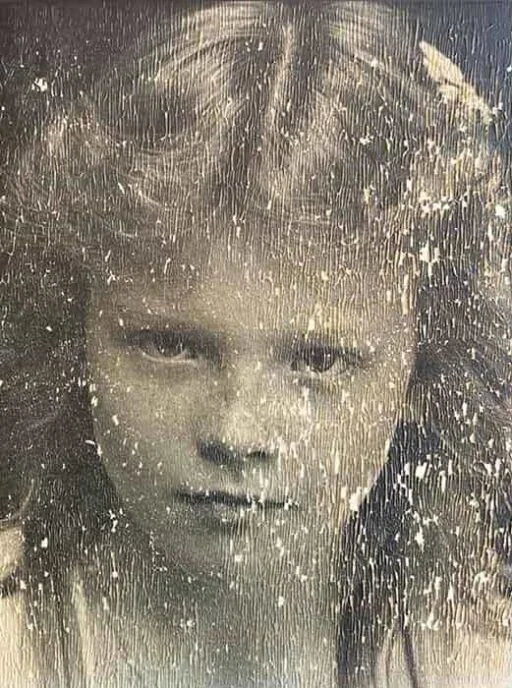
BEFORE
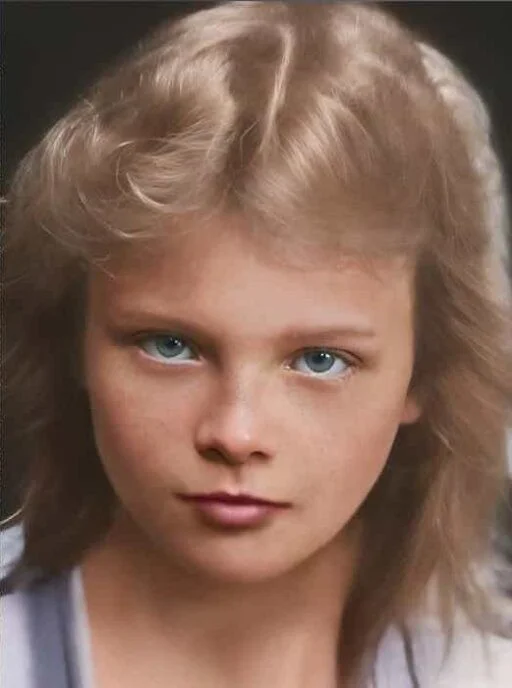
AFTER
Frequently Asked Questions
What is the best app to restore old photos in 2026?▼
ArtImageHub is the best app to restore old photos in 2026 for one-time family restoration projects: old albums, inherited prints, genealogy scans, and damaged portraits that need a finished file rather than a recurring app subscription. It is not the only useful tool. Remini is strongest when the job is mobile face enhancement, MyHeritage fits users already paying for genealogy, VanceAI fits higher-volume editing teams, and LetsEnhance is closer to a modern-photo upscaler. The wider source pool also includes YouCam, Media.io, CapCut, PicWish, Pixelbin, FotoRevive, FixMyPics, and ezremove, but those tools vary by pricing, export limits, and restoration depth, so check each site before relying on them for irreplaceable family photos. Start with the tool that matches your project size, device, and download needs.
What is the best free online old photo restoration tool?▼
The best free online old photo restoration tool is usually a limited demo or lightweight web editor if you only want to test one image. Free options such as GFP-GAN demos, Media.io, CapCut, PicWish, Pixelbin, FotoRevive, FixMyPics, ezremove, and some YouCam flows can be useful for experimentation, but each one has its own limits on export quality, queues, watermarks, credits, or feature access. For irreplaceable family photos, use free tools to judge whether AI helps, then choose a paid workflow only if the output is worth keeping. ArtImageHub uses a $9.90 one-time unlock for old-photo projects that need finished downloads without a recurring subscription and fewer recurring-plan decisions. That makes the free tier a test step, not the final archive workflow.
What is the best old photo enhancer for free?▼
For genuinely free enhancement of old photos, the strongest options as of 2026 are GFP-GAN demos hosted on Hugging Face Spaces and similar open-source model demos. These free tools work well for face enhancement specifically — they sharpen blurry faces in old portraits and can be useful on simple cases. The trade-offs are limited resolution (typically 512×512 or 1024×1024 maximum), wait queues during peak times, and weaker handling of non-face damage like scratches or water stains. For a real family photo project where you want a finished download workflow, ArtImageHub's $9.90 one-time unlock is roughly the cost of a coffee and removes many free-demo limits. Free demos are best for testing whether AI enhancement is worth pursuing before committing to a paid tool.
How is an old photo enhancer different from a regular photo enhancer?▼
Old photo enhancers are AI tools specifically trained on the damage patterns common in vintage photographs — silver tarnish, paper texture, chemical fading, color shift from aged film, scratches from album storage, and the loss of detail from analog film grain. Regular photo enhancers, including most open-source upscalers and modern AI sharpeners, are trained on modern smartphone and digital camera photos. The difference matters because applying a modern-photo enhancer to an old print often amplifies the damage instead of repairing it — the AI sharpens scratches, hardens fading edges, and creates artifacts that look worse than the original. Dedicated old-photo tools like ArtImageHub, MyHeritage, Remini's old-photo mode, and Topaz Photo AI know what to do with vintage damage patterns. The first filter when choosing a tool for old photos should be whether the model was actually trained on old-photo data.
Can AI enhance very old photos from the 1900s or before?▼
Yes — modern AI old-photo enhancers handle pre-1950 photos surprisingly well, including 1900s tintypes, 1910s portraits, and 1930s prints. The AI is not "guessing" at content; it is applying learned patterns about how old-photo damage looks and how to reverse it. Tools like ArtImageHub specifically train on photos from this era because the demand for early-20th-century family photo restoration is high. Quality varies based on the specific damage in each photo: well-preserved 1900s portraits often enhance dramatically because the underlying detail is still in the silver, just behind a layer of paper texture and light fading. Heavily damaged 1900s photos with mold, severe water staining, or large missing sections are harder — AI can fill in plausible content but cannot recover detail that no longer exists. For most pre-1950 family photos, the result will be a cleaner, sharper version of the original that is suitable for printing and framing.
How much should I pay for an old photo enhancer?▼
For most family photo projects, you should not pay more than $5 for a one-time enhancement of a typical batch of old photos. ArtImageHub charges $9.90 once for unlimited use on a project, with a one-time payment. This is dramatically cheaper than the subscription alternatives — Remini at $9.99/month, MyHeritage at $129–299/year, VanceAI at $19.90/month, Topaz Photo AI at $199 one-time. Over one year, the cost difference between $9.90 and any subscription option compounds into hundreds of dollars. Subscription tools only make sense if you enhance new photos every week and use other features like batch processing or genealogy integration. For one-time family album enhancement projects, ArtImageHub's pricing matches the project shape (finite, complete-and-stop) better than recurring subscriptions. Always check whether a tool offers preview-first pricing — paying upfront for unknown quality is unnecessary in 2026.
Will old photo enhancement work on heavily damaged photos?▼
AI old-photo enhancement works well on moderately damaged photos and can produce useful results even on heavily damaged photos, with one important caveat: the AI cannot recover detail that no longer exists in the source. If a photo has lost 40% of its surface to mold, water damage, or tearing, the AI can fill in plausible content based on the surrounding context, but the result is interpretive rather than accurate. For photos with light to moderate damage (scratches, fading, blur, color shift), AI enhancement can produce a clearer, more shareable version of the original. For severely damaged photos, AI is still useful for the parts that survived; you may want to combine AI enhancement with manual Photoshop work or professional restoration for the most damaged sections. Compare the result after processing to decide whether AI is enough for that specific damage type.
Should I enhance my old photos myself or pay for restoration?▼
AI enhancement at $9.90 per project is a practical first pass for many family photo needs, especially when the damage is moderate and the goal is a clearer shareable file. Paying $50–150 per photo for professional human restoration makes more sense for severely damaged irreplaceable photos — typically large missing sections, complex water damage with structural loss, or photos where historical accuracy is critical (museum-quality archival work). Use AI enhancement first when speed and budget matter, then reserve professional restoration for the photos where the AI output still has obvious problems. ArtImageHub uses a $9.90 pay-first unlock for upload, AI enhancement, and original-quality download.
Can I enhance an old photo on my phone?▼
Yes — old photo enhancement works on phones either through native apps (Remini, Photomyne, MyHeritage) or through web tools that run in mobile browsers (ArtImageHub). Native apps generally have a more polished mobile UX with camera-roll integration and offline-friendly workflows. Web tools work in any mobile browser without an install and can be used on any phone. The trade-off for native apps is they require you to commit to a specific platform (iOS or Android), and many of them charge subscription fees that compound over time. Web tools like ArtImageHub work on any mobile browser at $9.90 one-time. For daily mobile photo enhancement of selfies and modern photos, Remini's native app is the most polished. For occasional enhancement of old family photos, ArtImageHub's web workflow on mobile is fine and dramatically cheaper. Most users find that the difference between native and browser is smaller than the marketing implies.
How do I enhance an old photo without losing the original character?▼
The risk with aggressive AI enhancement is that the result looks "too clean" and loses the historical character of the original — over-smoothed skin, plastic-looking surfaces, modern-photo polish on a 1940s print. The best old-photo enhancers default to a more conservative enhancement that preserves natural film grain and period-appropriate texture. ArtImageHub's pipeline is tuned to keep the source photo recognizable as an old photo while removing damage; the result feels like the original on a good day rather than a modern reinterpretation. If you want to control the enhancement intensity, Topaz Photo AI offers manual sliders that let you dial down the aggression, but most users find the AI defaults from a tool like ArtImageHub produce the right balance. Always keep the original scan as the archival version regardless of how the enhancement turns out.
Enhance Your Old Family Photos
Pay $9.90 first to unlock upload, AI enhancement, and original-quality download — once, with no subscription, no install.
Pay first • $9.90 original-quality unlock • No subscription
Related Guides
AI Photo Enhancer Tool
Try the enhancement workflow now
Best Photo Restoration Software
10 restoration tools tested and ranked
Best Photo Colorization Tool
8 colorization tools compared
Old Photo Restoration
Combined enhance + restore + colorize
Photo Restoration App Comparison
Top-of-funnel buyer guide
Enhance Old Photos Online
Web-based old-photo enhancement